Source @thailand_news
sted or poached chicken and rice, it is a high-protein favourite.
sted or poached chicken and rice, it is a high-protein favourite.
It comes from the southern Chinese province of Hainan, though today the dishes are served very differently. The Hainanese serve Khao Man Gai with separate ginger, chilli, and sweet soy sauces. Thai people mix those ingredients with fermented soybean paste, sugar, garlic, and vinegar to create Nam Jim Khao Man Gai, the signature dipping sauce.
It can be found from street vendors to upscale hotel restaurants, with prices ranging from 40 to 350 baht. Kuay Tiew Ruea (ก๋วยเตี๋ยวเรือ)
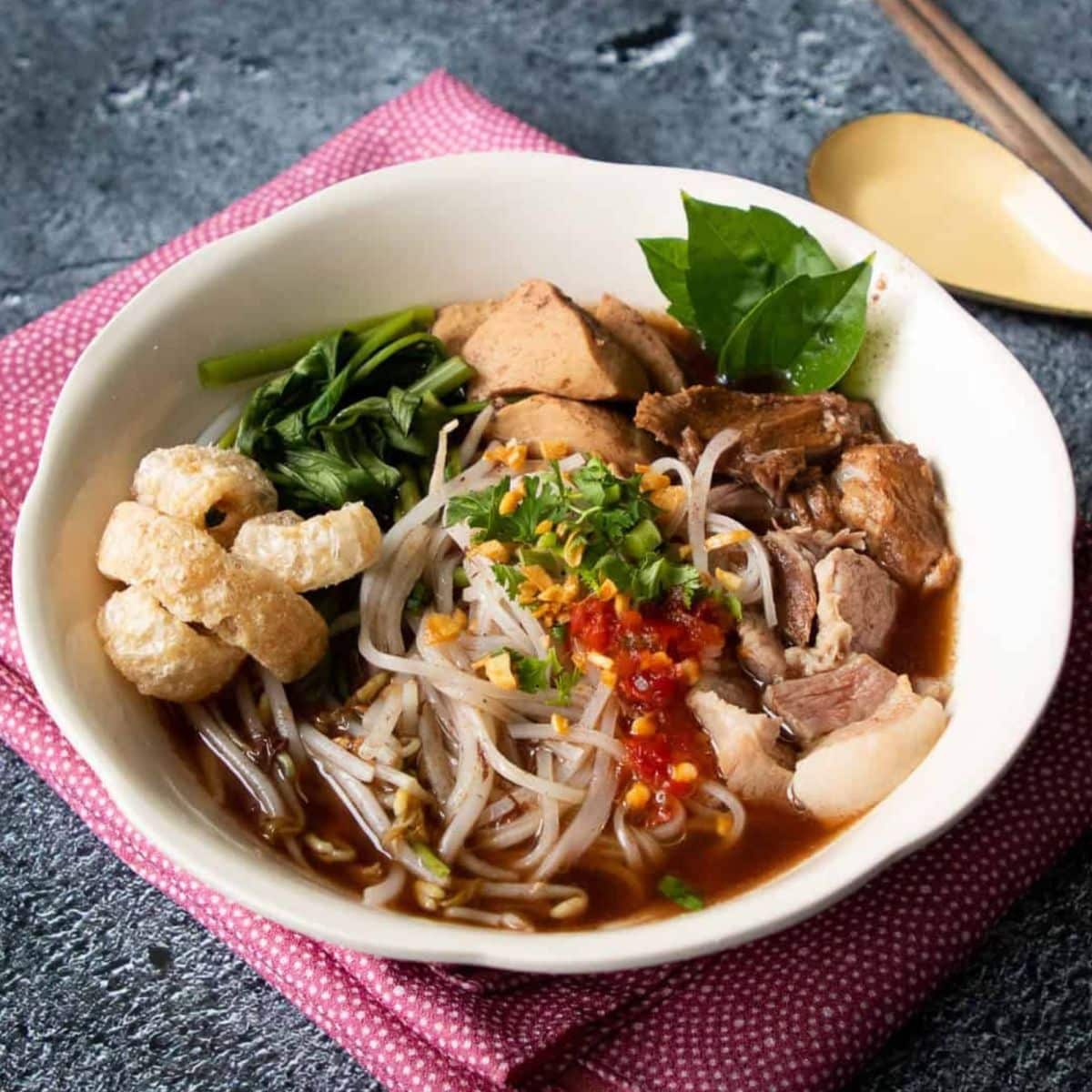
Kuay Tiew Ruea (boat noodles) are a popular lunch option in Thailand. Originally sold by vendors on boats in Bangkok’s canals, they are now mostly enjoyed at everyday roadside stalls, food halls, and street markets.
https://thethaiger.com/wp-content/uploads/2026/06/Untitled-design-3.jpg Photo: Hot Thai Kitchen
When ordering, you can choose from various noodle types, such as sen lek (medium rice noodles), sen mee (vermicelli), or sen yai (wide flat noodles), which sit in a dark, flavorful broth thickened with cow or pig blood and aromatic spices.
The broth is deeply savoury with a slight sweetness, though most locals add chilli flakes, vinegar, and sugar at the table to add to the heat and tang.
While historically served in tiny, two-bite bowls to prevent spilling on rocking boats, modern roadside stalls now serve them in standard, full-sized portions. A hearty bowl at a street stall typically costs between 40 and 60 baht.
In upscale restaurants, the dish is often reimagined in large bowls featuring premium ingredients like wagyu beef or kurobuta pork, where prices can climb up to 600 baht. Pad Krapao (ผัดกะเพรา)
To eat like a local, try Pad Krapao, one of the most popular foods in Thailand and a classic street lunch choice.
https://thethaiger.com/wp-content/uploads/2026/06/Untitled-design-4.jpg Photo: Cooking Therapy
This stir-fry with jasmine rice, fried egg, and a variety of meats is the hamburger of Thailand.
It uses the famous bird’s eye chillies, which are 10 to 20 times hotter than jalapeños on average. To request mild spice, ask for Pad Krapao Ped Noi, kâ/khráp. To ask for no spice, say Mai Ped instead.
Pad Krapao also features Holy Basil, an herb with a more pungent taste than traditional Genovese basil. Native to the Indian subcontinent, it delivers an intensely peppery flavour.
https://thethaiger.com/wp-content/uploads/2026/06/Holy-Basil-vs-Thai-Basil-Key-Differences-Best-Uses1.webp Photo: Deliciously Rushed
Although both herbs are common in Thai cuisine, Holy Basil differs from Horapha, or Thai basil, which is recognisable by its narrow leaves and purple stems.
Like most plated lunch and dinner options, Pad Krapao varies significantly in price from 50 baht on the street to 400+ baht if you’re getting fancy. Som Tam (ส้มตำ)
Thais commonly enjoy Som Tam, or papaya salad, for both lunch and dinner.
It features pounded unripe green papaya, bird’s eye chillies, cherry tomatoes, snake beans (longer green beans), Thai basil, dried shrimp and roasted peanuts.
https://thethaiger.com/wp-content/uploads/2026/06/papaya.webp Photo: Serious Eats
Som Tam translates literally as ‘pounded sour’ and refers to the technique by which cooks create the salad, bouncing ingredients in a wooden mortar until they are juiced but still crunchy.
For a more traditional and intensely savoury variation, cooks will often swap the peanuts and dried shrimp in favour of pla lar (or pla ra), a northeastern staple, which is a pungent, deeply flavorful paste made from fish fermented with rice bran and salt. Khao Soi (ข้าวซอย)
Another popular Thai noodle dish is Khao Soi. Influenced by Burmese cuisine, its distinctive yellow curry broth is combined with chicken or beef and crispy fried egg noodles.
While its name directly translates to ‘cut rice,’ Khao Soi noodles are actually made with wheat flour, not rice. It is mostly eaten earlier in t[...]
← Back to newsIt comes from the southern Chinese province of Hainan, though today the dishes are served very differently. The Hainanese serve Khao Man Gai with separate ginger, chilli, and sweet soy sauces. Thai people mix those ingredients with fermented soybean paste, sugar, garlic, and vinegar to create Nam Jim Khao Man Gai, the signature dipping sauce.
It can be found from street vendors to upscale hotel restaurants, with prices ranging from 40 to 350 baht. Kuay Tiew Ruea (ก๋วยเตี๋ยวเรือ)
Kuay Tiew Ruea (boat noodles) are a popular lunch option in Thailand. Originally sold by vendors on boats in Bangkok’s canals, they are now mostly enjoyed at everyday roadside stalls, food halls, and street markets.
https://thethaiger.com/wp-content/uploads/2026/06/Untitled-design-3.jpg Photo: Hot Thai Kitchen
When ordering, you can choose from various noodle types, such as sen lek (medium rice noodles), sen mee (vermicelli), or sen yai (wide flat noodles), which sit in a dark, flavorful broth thickened with cow or pig blood and aromatic spices.
The broth is deeply savoury with a slight sweetness, though most locals add chilli flakes, vinegar, and sugar at the table to add to the heat and tang.
While historically served in tiny, two-bite bowls to prevent spilling on rocking boats, modern roadside stalls now serve them in standard, full-sized portions. A hearty bowl at a street stall typically costs between 40 and 60 baht.
In upscale restaurants, the dish is often reimagined in large bowls featuring premium ingredients like wagyu beef or kurobuta pork, where prices can climb up to 600 baht. Pad Krapao (ผัดกะเพรา)
To eat like a local, try Pad Krapao, one of the most popular foods in Thailand and a classic street lunch choice.
https://thethaiger.com/wp-content/uploads/2026/06/Untitled-design-4.jpg Photo: Cooking Therapy
This stir-fry with jasmine rice, fried egg, and a variety of meats is the hamburger of Thailand.
It uses the famous bird’s eye chillies, which are 10 to 20 times hotter than jalapeños on average. To request mild spice, ask for Pad Krapao Ped Noi, kâ/khráp. To ask for no spice, say Mai Ped instead.
Pad Krapao also features Holy Basil, an herb with a more pungent taste than traditional Genovese basil. Native to the Indian subcontinent, it delivers an intensely peppery flavour.
https://thethaiger.com/wp-content/uploads/2026/06/Holy-Basil-vs-Thai-Basil-Key-Differences-Best-Uses1.webp Photo: Deliciously Rushed
Although both herbs are common in Thai cuisine, Holy Basil differs from Horapha, or Thai basil, which is recognisable by its narrow leaves and purple stems.
Like most plated lunch and dinner options, Pad Krapao varies significantly in price from 50 baht on the street to 400+ baht if you’re getting fancy. Som Tam (ส้มตำ)
Thais commonly enjoy Som Tam, or papaya salad, for both lunch and dinner.
It features pounded unripe green papaya, bird’s eye chillies, cherry tomatoes, snake beans (longer green beans), Thai basil, dried shrimp and roasted peanuts.
https://thethaiger.com/wp-content/uploads/2026/06/papaya.webp Photo: Serious Eats
Som Tam translates literally as ‘pounded sour’ and refers to the technique by which cooks create the salad, bouncing ingredients in a wooden mortar until they are juiced but still crunchy.
For a more traditional and intensely savoury variation, cooks will often swap the peanuts and dried shrimp in favour of pla lar (or pla ra), a northeastern staple, which is a pungent, deeply flavorful paste made from fish fermented with rice bran and salt. Khao Soi (ข้าวซอย)
Another popular Thai noodle dish is Khao Soi. Influenced by Burmese cuisine, its distinctive yellow curry broth is combined with chicken or beef and crispy fried egg noodles.
While its name directly translates to ‘cut rice,’ Khao Soi noodles are actually made with wheat flour, not rice. It is mostly eaten earlier in t[...]