Source @thailand_news
he day, so be sure to grab it before vendors start selling out!
he day, so be sure to grab it before vendors start selling out!
https://thethaiger.com/wp-content/uploads/2026/06/Untitled-design.jpg Photo: Feasting at Home
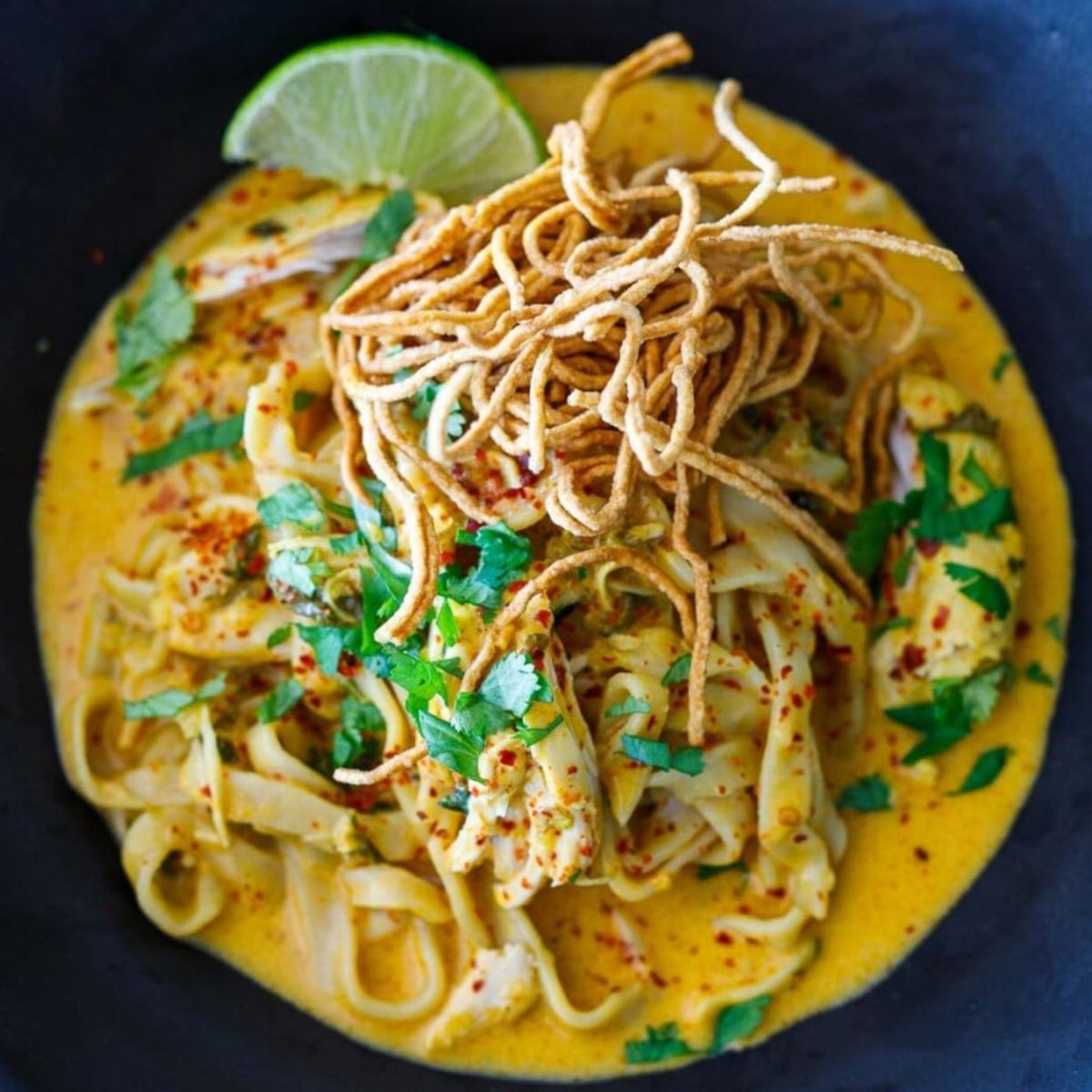
The rich, coconut-milk-based curry is traditionally made with dried bird’s eye chillies, so remember to ask for less heat if needed. It costs between 50 and 120 baht.
To balance the intense spice and richness of the broth, locals always serve the dish alongside fresh lime wedges, chopped raw shallots, and pickled mustard greens to mix in. Hot Pot
If you’re looking for a more interactive experience beyond the usual popular foods in Thailand, join locals in the longstanding tradition of communal dining with hotpot
There is a wide range, from street-side stalls to upscale restaurants, and from mild broths to mouth-numbingly spicy ones. Shabu-shabu (ชาบูชาบู)
In the last few decades, the Japanese shabu-shabu broth has become one of the most popular iterations of hotpot. It uses paper-thin slices of meat cooked in a relatively light broth infused with dried kelp.
Japanese restaurant staff are said to have named it after the sound of rinsing hand towels, which they felt resembled the rhythmic swishing sound ‘shabu shabu’.
The flavour comes mostly from the dipping sauces, allowing more individual control over spice levels.
https://thethaiger.com/wp-content/uploads/2026/06/shabu-shabu-wagyu-noodle-broth-recipe.webp Photo: The Wasabi Company
Shabu hotpot in Thailand can cost anywhere from 350 baht, all the way to 2,300 per person, depending on the spot. Sichuan Mala (หม่าล่า)
Another popular variety is Sichuan Mala, which is famous for its bold heat and distinctive numbing sensation. Rather than relying on dipping sauces for flavour, diners cook thin slices of meat directly in a broth infused with Sichuan peppercorns.
In 2018, the Sichuan Mala trend skyrocketed in popularity in Thailand, with Chinese chains and upscale restaurants spreading across Bangkok.
https://thethaiger.com/wp-content/uploads/2026/06/IMG_3839.jpg Photo: The World of Street Food
Some chains offer the dish for 250 baht, while others charge over 1,500 baht per head. Though its worth noting that some places charge by the weight, meaning that you choose what you want in the mala, and pay accordingly. Thai Sukiyaki (สุกี้)
The most widely available style is Thai Sukiyaki hotpot, which features the well-known sweet and spicy sauce known as Nam Jim Suki.
You can customise it with a variety of meats, seafood and other ingredients, all cooked in a simple chicken or pork-bone broth with clear glass noodles.
The dish was named in the 1950s after the popular Japanese song Sukiyaki. Despite the name, it is entirely different from the Japanese dish, which typically consists of simmered beef and thick udon noodles.
https://thethaiger.com/wp-content/uploads/2026/06/R02577_Thai_Suki_Hot_Pot_3-619x412-1.jpg Photo: Asian Inspirations
All-you-can-eat buffets typically cost less than 500 baht. Dessert
Locals and tourists alike enjoy Khao Neo Mamuang (ข้าวเหนียวมะม่วง) – mango sticky rice. If you’re looking for some lesser-known local favourites, try Khanom Krok (ขนมครก) Kluay Kaek (กล้วยแขก) or Sankaya (สังขยา) Khanom Krok (ขนมครก)
Khanom Krok is one of Thailand’s most overlooked desserts. Street vendors cook these coconut-rice pancakes, filled with coconut custard, in specially designed pans until they are crisp on the outside and soft in the centre.
Thai folklore holds that the dessert’s two halves – the crisp outer shell and soft custard inside – represent a forbidden love story, symbolising a young couple destined to remain together for eternity.
https://thethaiger.com/wp-content/uploads/2026/06/503488232_9249548205146940_3715875968298035060_n.jpg Photo: Pongsak Techawatcharanon
While they are sweet, you can easily find Khanom Krok topped with pumpkin, scallions, sweet corn, and shredded taro, adding a savoury twist.
They cost between 30 and [...]
← Back to newshttps://thethaiger.com/wp-content/uploads/2026/06/Untitled-design.jpg Photo: Feasting at Home
The rich, coconut-milk-based curry is traditionally made with dried bird’s eye chillies, so remember to ask for less heat if needed. It costs between 50 and 120 baht.
To balance the intense spice and richness of the broth, locals always serve the dish alongside fresh lime wedges, chopped raw shallots, and pickled mustard greens to mix in. Hot Pot
If you’re looking for a more interactive experience beyond the usual popular foods in Thailand, join locals in the longstanding tradition of communal dining with hotpot
There is a wide range, from street-side stalls to upscale restaurants, and from mild broths to mouth-numbingly spicy ones. Shabu-shabu (ชาบูชาบู)
In the last few decades, the Japanese shabu-shabu broth has become one of the most popular iterations of hotpot. It uses paper-thin slices of meat cooked in a relatively light broth infused with dried kelp.
Japanese restaurant staff are said to have named it after the sound of rinsing hand towels, which they felt resembled the rhythmic swishing sound ‘shabu shabu’.
The flavour comes mostly from the dipping sauces, allowing more individual control over spice levels.
https://thethaiger.com/wp-content/uploads/2026/06/shabu-shabu-wagyu-noodle-broth-recipe.webp Photo: The Wasabi Company
Shabu hotpot in Thailand can cost anywhere from 350 baht, all the way to 2,300 per person, depending on the spot. Sichuan Mala (หม่าล่า)
Another popular variety is Sichuan Mala, which is famous for its bold heat and distinctive numbing sensation. Rather than relying on dipping sauces for flavour, diners cook thin slices of meat directly in a broth infused with Sichuan peppercorns.
In 2018, the Sichuan Mala trend skyrocketed in popularity in Thailand, with Chinese chains and upscale restaurants spreading across Bangkok.
https://thethaiger.com/wp-content/uploads/2026/06/IMG_3839.jpg Photo: The World of Street Food
Some chains offer the dish for 250 baht, while others charge over 1,500 baht per head. Though its worth noting that some places charge by the weight, meaning that you choose what you want in the mala, and pay accordingly. Thai Sukiyaki (สุกี้)
The most widely available style is Thai Sukiyaki hotpot, which features the well-known sweet and spicy sauce known as Nam Jim Suki.
You can customise it with a variety of meats, seafood and other ingredients, all cooked in a simple chicken or pork-bone broth with clear glass noodles.
The dish was named in the 1950s after the popular Japanese song Sukiyaki. Despite the name, it is entirely different from the Japanese dish, which typically consists of simmered beef and thick udon noodles.
https://thethaiger.com/wp-content/uploads/2026/06/R02577_Thai_Suki_Hot_Pot_3-619x412-1.jpg Photo: Asian Inspirations
All-you-can-eat buffets typically cost less than 500 baht. Dessert
Locals and tourists alike enjoy Khao Neo Mamuang (ข้าวเหนียวมะม่วง) – mango sticky rice. If you’re looking for some lesser-known local favourites, try Khanom Krok (ขนมครก) Kluay Kaek (กล้วยแขก) or Sankaya (สังขยา) Khanom Krok (ขนมครก)
Khanom Krok is one of Thailand’s most overlooked desserts. Street vendors cook these coconut-rice pancakes, filled with coconut custard, in specially designed pans until they are crisp on the outside and soft in the centre.
Thai folklore holds that the dessert’s two halves – the crisp outer shell and soft custard inside – represent a forbidden love story, symbolising a young couple destined to remain together for eternity.
https://thethaiger.com/wp-content/uploads/2026/06/503488232_9249548205146940_3715875968298035060_n.jpg Photo: Pongsak Techawatcharanon
While they are sweet, you can easily find Khanom Krok topped with pumpkin, scallions, sweet corn, and shredded taro, adding a savoury twist.
They cost between 30 and [...]