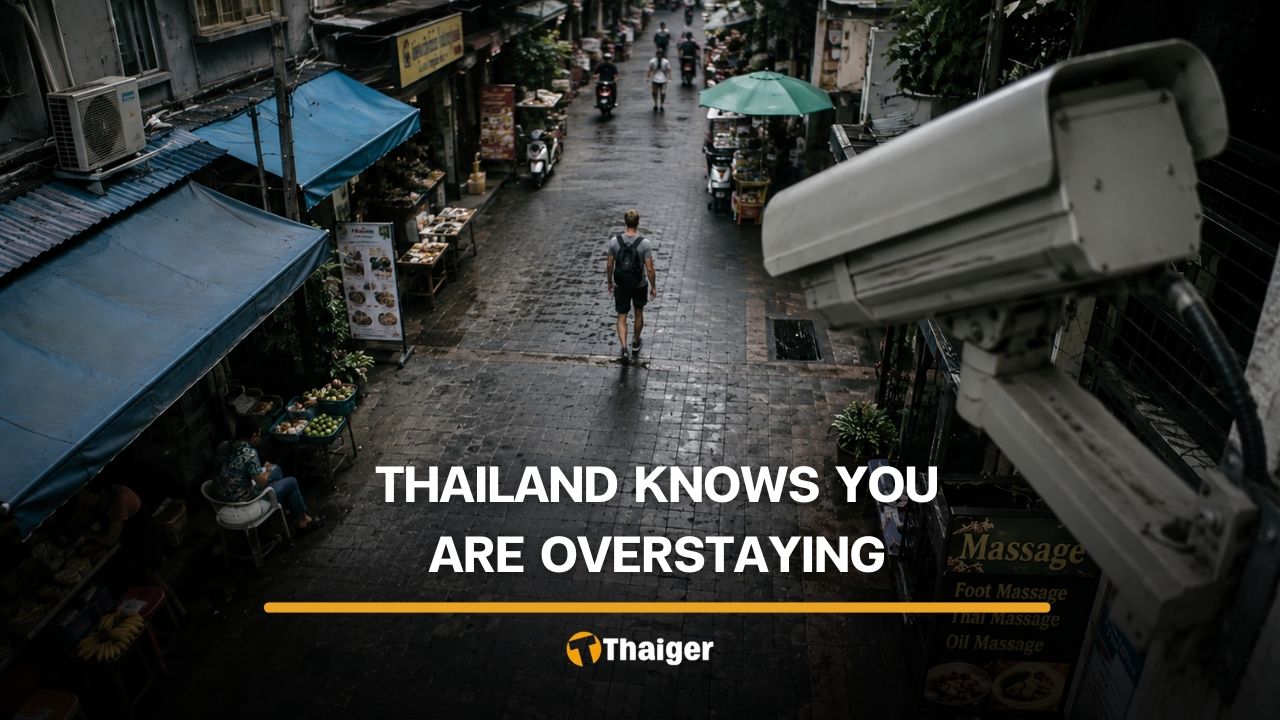
Source @thailand_news
Thailand knows exactly who overstays – so why can’t it catch them?
Thailand knows exactly who overstays – so why can’t it catch them?
https://thethaiger.com/wp-content/uploads/2026/06/สำเนาของ-23-34-7-1.jpg Thailand knows exactly who overstays – so why can’t it catch them?Legacyhttps://thethaiger.com/wp-content/uploads/2026/06/สำเนาของ-23-34-7-1.jpg
Every time a foreigner is arrested in Thailand for a crime, only for police to reveal that the suspect had been living in the country illegally for months or even years, the same question surfaces among Thai readers. If the state stamps every passport, scans every face and records every arrival, how does anyone manage to disappear for so long?
The uncomfortable answer is that the Thai state almost always knows who has overstayed. What it has struggled to do, for the better part of a decade, is act on that knowledge in a consistent and timely way. The gap between knowing and catching is where the real problem lives, and it is a gap built less from ignorance than from how enforcement is designed, resourced and politically motivated. A system that records everything
On paper, Thailand has one of the more data-rich immigration regimes in the region. The Immigration Bureau captures fingerprints and facial images at entry, and since May 2025, every foreign arrival must file the Thailand Digital Arrival Card, the electronic replacement for the old paper TM6 form.
https://thethaiger.com/wp-content/uploads/2026/06/overstay-1.jpg Photo by Dmitry Bogdanov from Canva
Long-stay residents must report their address every 90 days, and landlords are legally required to notify immigration when a foreigner moves in through the TM30 system. From 2026, officials say permitted stay is calculated automatically through a centralised database, so the moment an arrival has no matching departure record, that person is flagged as an overstayer in the system.
In other words, the data exists. A foreigner who entered and never left is not invisible to the bureau. The record sits in a database, waiting. The difference between a database and a manhunt
The catch is that the system is fundamentally passive, and a flag in a database does not send an officer to anyone’s door. In practice, overstayers tend to be caught only at a handful of trigger points. They are stopped when they finally try to leave, and the system alerts officers at the airport.
They are swept up in raids and checkpoints, are reported by a neighbour or a tip, or they commit another offence and their status surfaces during a routine check. A person who lives quietly, never reports, avoids trouble and stays off the road can remain undetected for a remarkably long time.
The clearest pattern is not the rare long-term overstayer who makes headlines, although those exist too, with quiet residents occasionally found years past their permitted stay when nothing ever flagged them. It is the steady stream of arrests in which the person was never caught for overstaying at all. They were caught for something else, and the expired permission only surfaced once officers ran their records.
https://thethaiger.com/wp-content/uploads/2026/06/overstay-2.jpg
In June 2026, police in Pattaya detained a 40 year old British man after he allegedly threw acid at the caretaker of an apartment building, leaving her seriously injured. According to police, it was only when they checked his immigration status that they found he had been living in the country on a permit that lapsed in February. The violence was what brought him to the bureau’s attention. The overstay, on its own, never would have.
The same month, police in Udon Thani arrested a foreign couple in connection with the death of a two week old infant. Officers said they had tracked the pair through closed-circuit footage and a tip that the couple was staying at a local hotel, and that a check of immigration records showed both had overstayed since March. Here again, the immigration v[...]
← Back to newshttps://thethaiger.com/wp-content/uploads/2026/06/สำเนาของ-23-34-7-1.jpg Thailand knows exactly who overstays – so why can’t it catch them?Legacyhttps://thethaiger.com/wp-content/uploads/2026/06/สำเนาของ-23-34-7-1.jpg
Every time a foreigner is arrested in Thailand for a crime, only for police to reveal that the suspect had been living in the country illegally for months or even years, the same question surfaces among Thai readers. If the state stamps every passport, scans every face and records every arrival, how does anyone manage to disappear for so long?
The uncomfortable answer is that the Thai state almost always knows who has overstayed. What it has struggled to do, for the better part of a decade, is act on that knowledge in a consistent and timely way. The gap between knowing and catching is where the real problem lives, and it is a gap built less from ignorance than from how enforcement is designed, resourced and politically motivated. A system that records everything
On paper, Thailand has one of the more data-rich immigration regimes in the region. The Immigration Bureau captures fingerprints and facial images at entry, and since May 2025, every foreign arrival must file the Thailand Digital Arrival Card, the electronic replacement for the old paper TM6 form.
https://thethaiger.com/wp-content/uploads/2026/06/overstay-1.jpg Photo by Dmitry Bogdanov from Canva
Long-stay residents must report their address every 90 days, and landlords are legally required to notify immigration when a foreigner moves in through the TM30 system. From 2026, officials say permitted stay is calculated automatically through a centralised database, so the moment an arrival has no matching departure record, that person is flagged as an overstayer in the system.
In other words, the data exists. A foreigner who entered and never left is not invisible to the bureau. The record sits in a database, waiting. The difference between a database and a manhunt
The catch is that the system is fundamentally passive, and a flag in a database does not send an officer to anyone’s door. In practice, overstayers tend to be caught only at a handful of trigger points. They are stopped when they finally try to leave, and the system alerts officers at the airport.
They are swept up in raids and checkpoints, are reported by a neighbour or a tip, or they commit another offence and their status surfaces during a routine check. A person who lives quietly, never reports, avoids trouble and stays off the road can remain undetected for a remarkably long time.
The clearest pattern is not the rare long-term overstayer who makes headlines, although those exist too, with quiet residents occasionally found years past their permitted stay when nothing ever flagged them. It is the steady stream of arrests in which the person was never caught for overstaying at all. They were caught for something else, and the expired permission only surfaced once officers ran their records.
https://thethaiger.com/wp-content/uploads/2026/06/overstay-2.jpg
In June 2026, police in Pattaya detained a 40 year old British man after he allegedly threw acid at the caretaker of an apartment building, leaving her seriously injured. According to police, it was only when they checked his immigration status that they found he had been living in the country on a permit that lapsed in February. The violence was what brought him to the bureau’s attention. The overstay, on its own, never would have.
The same month, police in Udon Thani arrested a foreign couple in connection with the death of a two week old infant. Officers said they had tracked the pair through closed-circuit footage and a tip that the couple was staying at a local hotel, and that a check of immigration records showed both had overstayed since March. Here again, the immigration v[...]