Source @thailand_news
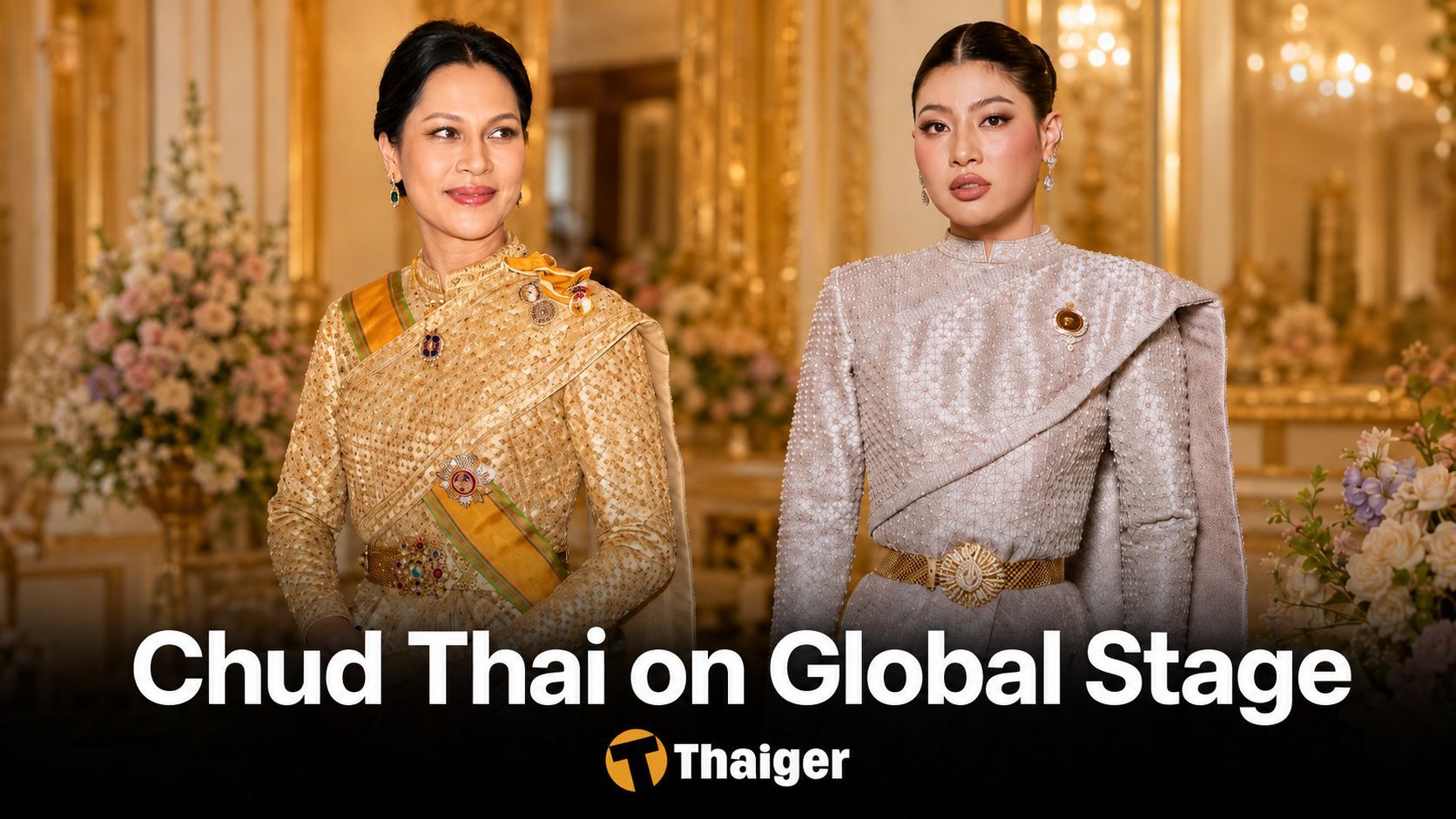
Chud Thai conquered Paris. Thailand’s most elegant dress 66 years in the making.
Chud Thai conquered Paris. Thailand’s most elegant dress 66 years in the making.
https://thethaiger.com/wp-content/uploads/2026/05/c9ca75a5-bccb-4bea-9efc-2aaf89bc7318.jpg Chud Thai conquered Paris. Thailand’s most elegant dress 66 years in the making.Legacyhttps://thethaiger.com/wp-content/uploads/2026/05/c9ca75a5-bccb-4bea-9efc-2aaf89bc7318.jpg
A former royal palace in the heart of Paris, built for kings and art, its halls now draped in Thai silk. Outside, the Seine carries its usual indifferent grey. Inside, visitors from a dozen countries are standing very still in front of a gold-and-black gown that stopped the room.
That gown, a Chud Thai Siwalai, has been stopping rooms for over six decades. It’s just that now the rooms are in Paris. The Dress That Started With a Problem
In 1960, Queen Sirikit was preparing to accompany King Bhumibol on a state visit to Europe and the United States. She realised something that no one had quite said out loud before: Thai women had their own traditions of dress, their own cultural identity, but no single recognised national costume.
So she commissioned a group of specialists to revive and modernise the styles Thai women had worn for centuries, creating something that could represent the country with dignity on the world stage.
What came out of that commission was the chud thai phra ratchaniyom, 8 styles of royal Thai dress. Each one named, each one purposeful. And of the eight, one was made for the most formal moments of all.
https://thethaiger.com/wp-content/uploads/2026/05/ภาพถ่ายหน้าจอ-2569-05-27-เวลา-11.09.24-AM-600x820.jpg So What Actually Is a Siwalai?
Fair question. The Siwalai takes its name from the Siwalai Palace inside the Grand Palace compound. It was historically the dress of high-ranking women, worn to royal ceremonies, state occasions, formal banquets, and auspicious events like engagements and wedding celebrations.
The construction is considered the most layered of all eight styles. A fitted long-sleeved top with a small standing collar is worn beneath a diagonal sabai sash, hand-embroidered with traditional Thai motifs.
The skirt is cut in the na nang style with a chai phok fold at the front, fastened with a gold or silver belt, and paired with a full set of jewellery, earrings, necklace, bracelet, and sangwan chest ornament. The fabric is typically silk brocade or gold-woven cloth, reserved for full-ceremonial dress occasions.
There’s something about the sash layer, the way it adds depth without adding weight, that makes the Siwalai feel ancient and architecturally considered.
https://thethaiger.com/wp-content/uploads/2026/05/Dtbezn3nNUxytg04aviDQHWhrCITLkqaRfTxnRNfkcyWAC-454x820.jpg Queen Sirikit made the Silk Diplomacy
Queen Sirikit was the one who took Thai silk from artisan tradition to the international stage, wearing hand-woven Thai fabrics on state visits abroad, elevating what had been a local craft into something the world’s most watched royal could wear with pride before heads of state.
In an era when Asian monarchies were often viewed through a lens of exoticism by the Western press, she chose not to adapt.
Among the documented pieces: a gold Siwalai in black pha yuok silk woven with dok phikun motifs, made by House of Kornkaew, worn during an official state visit to Luxembourg. At state dinners across Europe and America, the Thai Queen was consistently one of the most photographed women in the room, not because the press was covering Thailand, but because the dress made people stop and look. Sixty-Six Years Later: Paris Gets the Full Picture
In 2026, Princess Sirivannavari Nariratana took on the role of royal patron for La Mode en Majesté Haute couture et tradition à la cour de Thaïlande, a landmark exhibition organised through a collaboration between SACIT, the Queen Sirikit Mu[...]
← Back to newshttps://thethaiger.com/wp-content/uploads/2026/05/c9ca75a5-bccb-4bea-9efc-2aaf89bc7318.jpg Chud Thai conquered Paris. Thailand’s most elegant dress 66 years in the making.Legacyhttps://thethaiger.com/wp-content/uploads/2026/05/c9ca75a5-bccb-4bea-9efc-2aaf89bc7318.jpg
A former royal palace in the heart of Paris, built for kings and art, its halls now draped in Thai silk. Outside, the Seine carries its usual indifferent grey. Inside, visitors from a dozen countries are standing very still in front of a gold-and-black gown that stopped the room.
That gown, a Chud Thai Siwalai, has been stopping rooms for over six decades. It’s just that now the rooms are in Paris. The Dress That Started With a Problem
In 1960, Queen Sirikit was preparing to accompany King Bhumibol on a state visit to Europe and the United States. She realised something that no one had quite said out loud before: Thai women had their own traditions of dress, their own cultural identity, but no single recognised national costume.
So she commissioned a group of specialists to revive and modernise the styles Thai women had worn for centuries, creating something that could represent the country with dignity on the world stage.
What came out of that commission was the chud thai phra ratchaniyom, 8 styles of royal Thai dress. Each one named, each one purposeful. And of the eight, one was made for the most formal moments of all.
https://thethaiger.com/wp-content/uploads/2026/05/ภาพถ่ายหน้าจอ-2569-05-27-เวลา-11.09.24-AM-600x820.jpg So What Actually Is a Siwalai?
Fair question. The Siwalai takes its name from the Siwalai Palace inside the Grand Palace compound. It was historically the dress of high-ranking women, worn to royal ceremonies, state occasions, formal banquets, and auspicious events like engagements and wedding celebrations.
The construction is considered the most layered of all eight styles. A fitted long-sleeved top with a small standing collar is worn beneath a diagonal sabai sash, hand-embroidered with traditional Thai motifs.
The skirt is cut in the na nang style with a chai phok fold at the front, fastened with a gold or silver belt, and paired with a full set of jewellery, earrings, necklace, bracelet, and sangwan chest ornament. The fabric is typically silk brocade or gold-woven cloth, reserved for full-ceremonial dress occasions.
There’s something about the sash layer, the way it adds depth without adding weight, that makes the Siwalai feel ancient and architecturally considered.
https://thethaiger.com/wp-content/uploads/2026/05/Dtbezn3nNUxytg04aviDQHWhrCITLkqaRfTxnRNfkcyWAC-454x820.jpg Queen Sirikit made the Silk Diplomacy
Queen Sirikit was the one who took Thai silk from artisan tradition to the international stage, wearing hand-woven Thai fabrics on state visits abroad, elevating what had been a local craft into something the world’s most watched royal could wear with pride before heads of state.
In an era when Asian monarchies were often viewed through a lens of exoticism by the Western press, she chose not to adapt.
Among the documented pieces: a gold Siwalai in black pha yuok silk woven with dok phikun motifs, made by House of Kornkaew, worn during an official state visit to Luxembourg. At state dinners across Europe and America, the Thai Queen was consistently one of the most photographed women in the room, not because the press was covering Thailand, but because the dress made people stop and look. Sixty-Six Years Later: Paris Gets the Full Picture
In 2026, Princess Sirivannavari Nariratana took on the role of royal patron for La Mode en Majesté Haute couture et tradition à la cour de Thaïlande, a landmark exhibition organised through a collaboration between SACIT, the Queen Sirikit Mu[...]