Source @thailand_news
* Average price: approximately 75,000 baht per sqm (island-wide blend)
nd it more interesting than most of the Thailand property coverage would lead them to expect. View properties for sale in Chiang Mai listed by FazWaz Koh Samui house prices
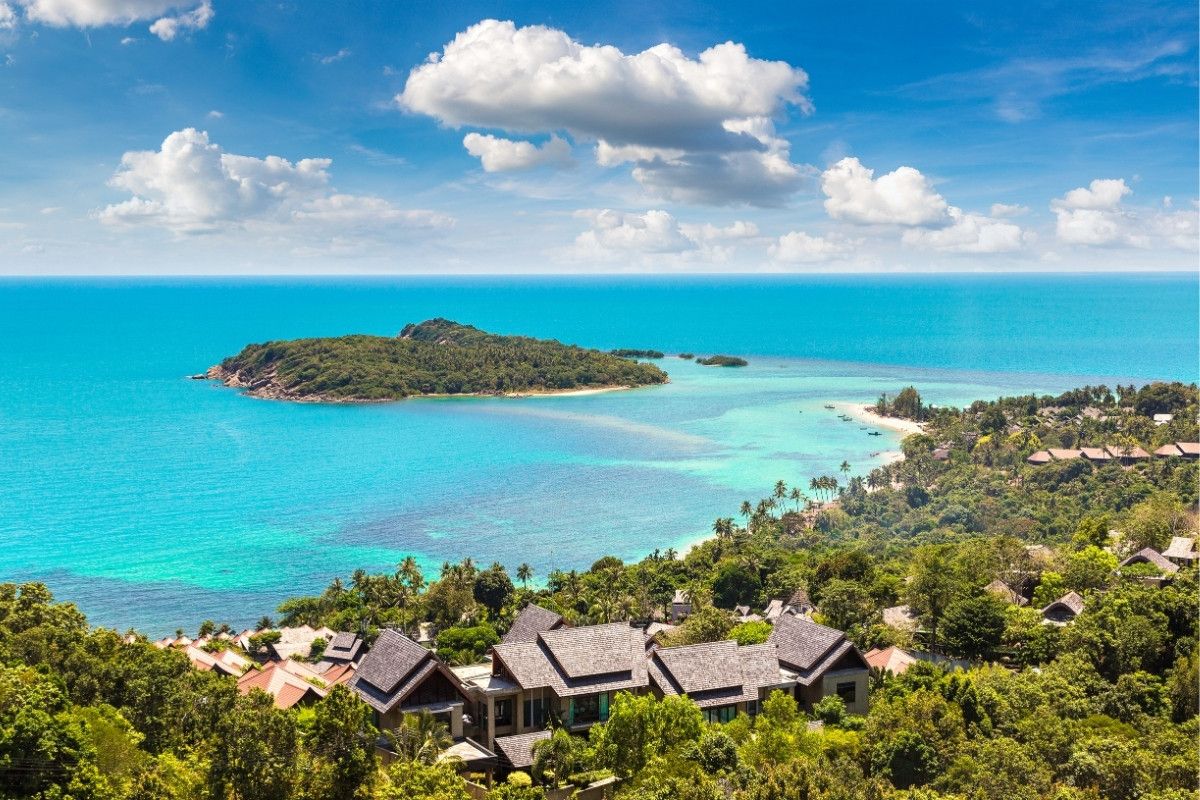
https://thethaiger.com/wp-content/uploads/2026/06/koh-samui-price.jpg Photo via bloodua/Getty Images At a glance:
* Average price: approximately 75,000 baht per sqm (island-wide blend)
* Standard three-bedroom villa: approximately 15 million baht (US$480,000)
* Gross rental yield: 6% to 10% for villas
* Market condition: appreciating; villa supply rising, short-let competition increasing
Around 80% of purchases on the island fall in the 8 million to 35 million baht range, with a standard three-bedroom villa averaging approximately 15 million baht (around US$480,000).
Property prices grew an estimated 6% between January 2025 and January 2026, which puts Koh Samui among the stronger-performing markets in Thailand over that period. V
illa rental inventory jumped 34% year-on-year as of early 2025, though, putting downward pressure on nightly rates even as sale prices have held, and short-let returns need to be modelled carefully for buyers counting on green-season income to make the numbers work. View properties for sale in Koh Samui listed by FazWaz Why house prices in Thailand vary so much by region
Foreign buyer concentration is the most direct explanation. Phuket and Bangkok attract the majority of international capital, and that demand sets price floors in premium segments regardless of what the domestic market is doing.
Phuket keeps appreciating while Bangkok corrects because one market runs on foreign cash buyers and the other is absorbing domestic oversupply.
Infrastructure compounds that gap further, as BTS and MRT proximity in Bangkok typically adds a 20% to 40% premium per square metre over equivalent product without rail access, and Phuket’s west coast premium is partly the same logic applied to airport proximity, resort infrastructure, and the international school corridor around Cherngtalay.
Beyond that, Thailand’s household debt sits at roughly 88% of GDP, which keeps domestic buying power constrained and makes banks cautious on lending. It is why Chiang Mai house prices look absurdly cheap relative to the lifestyle on offer – domestic buyers face affordability limits that most foreign buyers do not. Thailand’s real estate prices heading into the second half of 2026
Bangkok’s correction has further to run in mid-market segments, with new launches staying well below 20,000 units across all of 2025, and Chinese buyer demand not yet recovered to levels that would absorb the backlog quickly.
Phuket is tighter, with limited buildable land on the west coast and persistent foreign demand keeping the premium corridor under upward pressure. The window for buying ahead of the full re-rating in Bang Tao and Cherngtalay is still open, but it is the kind of window that does not announce itself when it closes.
For foreign buyers, the legal framework is consistent across all six markets, freehold title under the 49% foreign quota, purchase funds transferred via FET form, no stamp duty surcharge, and no capital gains tax on exit. Sponsored
The story Average house price in Thailand by region (2026) as seen on Thaiger News.
← Back to newshttps://thethaiger.com/wp-content/uploads/2026/06/koh-samui-price.jpg Photo via bloodua/Getty Images At a glance:
* Average price: approximately 75,000 baht per sqm (island-wide blend)
* Standard three-bedroom villa: approximately 15 million baht (US$480,000)
* Gross rental yield: 6% to 10% for villas
* Market condition: appreciating; villa supply rising, short-let competition increasing
Around 80% of purchases on the island fall in the 8 million to 35 million baht range, with a standard three-bedroom villa averaging approximately 15 million baht (around US$480,000).
Property prices grew an estimated 6% between January 2025 and January 2026, which puts Koh Samui among the stronger-performing markets in Thailand over that period. V
illa rental inventory jumped 34% year-on-year as of early 2025, though, putting downward pressure on nightly rates even as sale prices have held, and short-let returns need to be modelled carefully for buyers counting on green-season income to make the numbers work. View properties for sale in Koh Samui listed by FazWaz Why house prices in Thailand vary so much by region
Foreign buyer concentration is the most direct explanation. Phuket and Bangkok attract the majority of international capital, and that demand sets price floors in premium segments regardless of what the domestic market is doing.
Phuket keeps appreciating while Bangkok corrects because one market runs on foreign cash buyers and the other is absorbing domestic oversupply.
Infrastructure compounds that gap further, as BTS and MRT proximity in Bangkok typically adds a 20% to 40% premium per square metre over equivalent product without rail access, and Phuket’s west coast premium is partly the same logic applied to airport proximity, resort infrastructure, and the international school corridor around Cherngtalay.
Beyond that, Thailand’s household debt sits at roughly 88% of GDP, which keeps domestic buying power constrained and makes banks cautious on lending. It is why Chiang Mai house prices look absurdly cheap relative to the lifestyle on offer – domestic buyers face affordability limits that most foreign buyers do not. Thailand’s real estate prices heading into the second half of 2026
Bangkok’s correction has further to run in mid-market segments, with new launches staying well below 20,000 units across all of 2025, and Chinese buyer demand not yet recovered to levels that would absorb the backlog quickly.
Phuket is tighter, with limited buildable land on the west coast and persistent foreign demand keeping the premium corridor under upward pressure. The window for buying ahead of the full re-rating in Bang Tao and Cherngtalay is still open, but it is the kind of window that does not announce itself when it closes.
For foreign buyers, the legal framework is consistent across all six markets, freehold title under the 49% foreign quota, purchase funds transferred via FET form, no stamp duty surcharge, and no capital gains tax on exit. Sponsored
The story Average house price in Thailand by region (2026) as seen on Thaiger News.